

Wolf Tattoos for Men
The wolf is one of the most requested animals in a tattoo studio, and one of the most often done badly. It is a hard subject: dense fur, a long muzzle, and eyes that carry the whole piece. Get the eyes wrong and it reads as a husky.
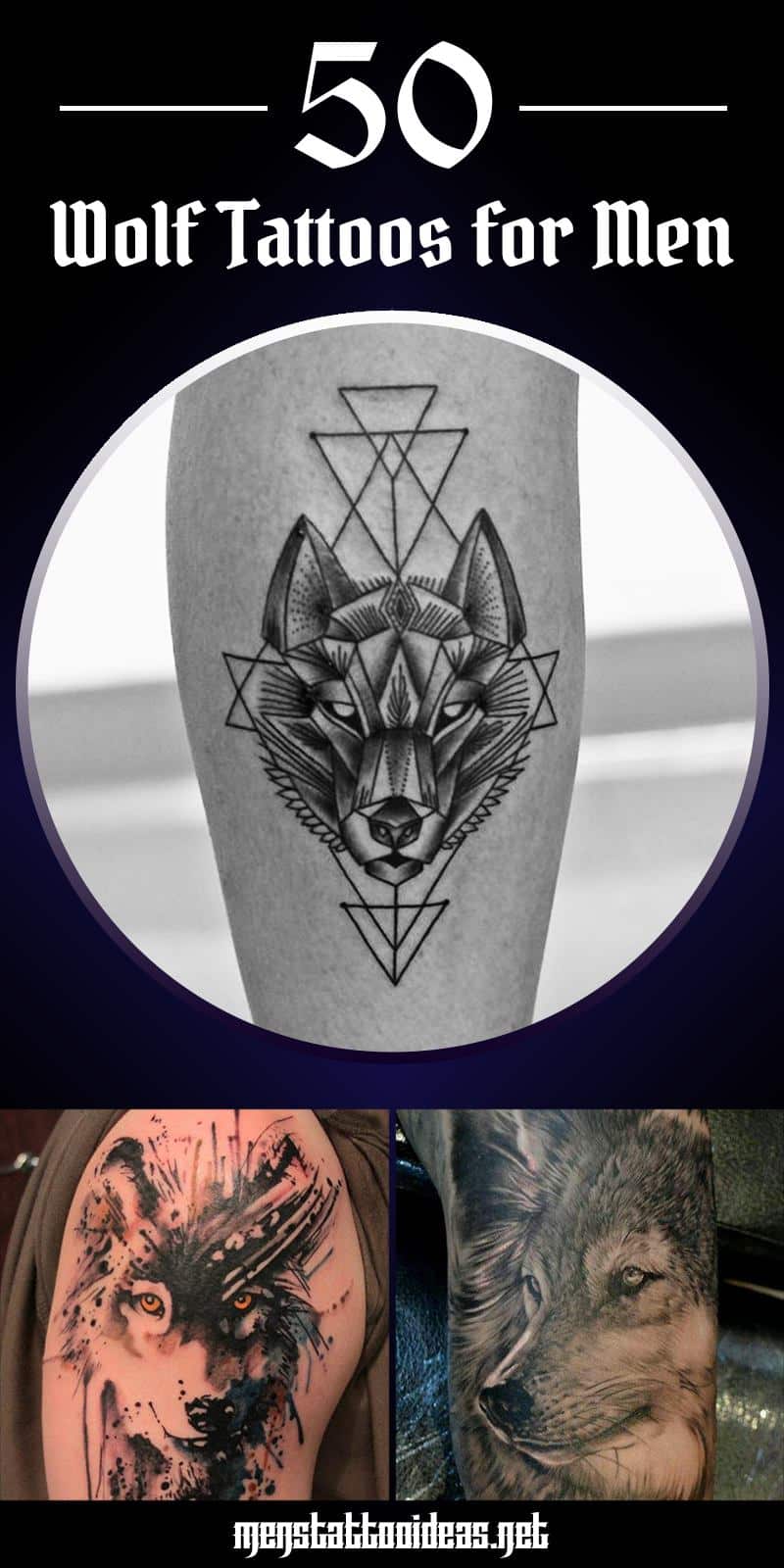
This guide covers what the wolf actually signals in 2026, what a good one costs, where it hurts, which styles still look like something in ten years, and what to say to your artist before the stencil goes on. The 51 designs below are reference for that conversation - not templates to copy.
What a wolf tattoo says now
The honest version: "lone wolf" is the most common reason people give, and the most common one artists quietly roll their eyes at. It has been done to death, usually small, usually on the forearm, usually alongside a compass.
That does not make it a bad reason. It makes it a reason worth being specific about. A wolf tattoo can carry very different weight depending on how it is drawn:
- A pack wolf - several animals, or one looking back - reads as family and loyalty. It is the version most people actually mean.
- A howling wolf against a moon is the most recognisable and the most generic. If you want it, ask your artist to do something with the composition rather than the subject.
- A snarling wolf reads as aggression, and reads that way to employers too. Consider that before putting it somewhere visible.
- A wolf with something soft - flowers, a nebula, a child's handwriting - is the combination artists tend to enjoy most, because the contrast gives the piece somewhere to go.


Where it goes, and what that costs
A wolf needs room. The single biggest mistake is asking for a detailed realistic head at 8cm, on a wrist - there is nowhere for the fur to live, and in five years it will be a grey smudge.
Rough guidance, and it is only that. Rates vary enormously by city and by artist reputation, and a good artist is worth waiting and paying for:
| Placement | Realistic size | Sittings | Pain (1-10) |
|---|---|---|---|
| Outer forearm | 15-20cm | 1-2 | 4 |
| Upper arm / bicep | 15-25cm | 1-2 | 3 |
| Chest | 20-30cm | 2-4 | 7 |
| Full back | 40cm+ | 6-12 | 6 |
| Thigh | 20-30cm | 2-3 | 4 |
| Ribs | 15-25cm | 2-3 | 9 |
| Hand / neck | small | 1 | 8 |
Most studios charge an hourly rate or a day rate rather than per piece. Ask for the rate and an honest sitting estimate up front; any artist worth booking will give you both without being pushed.
Hand, neck and face remain the placements people regret most often - not because they look worse, but because they are the ones you cannot take back when your circumstances change.


Styles that hold up
Tattoos are not paintings. They sit in living tissue that spreads, and they are lit by a light source that fades them. What follows is what artists consistently report about how these age:
Bold blackwork and neo-traditional. Heavy outlines, solid black, limited palette. These are the pieces that still read clearly at twenty years. If you want one wolf tattoo for life, this is the safe answer.
Black-and-grey realism. Beautiful when done by someone who genuinely does realism - ask to see healed photos, not fresh ones. Fresh work always looks sharp. Healed work is the only honest portfolio.
Geometric and linework. Clean and modern, and the riskiest of the mainstream styles. Very fine parallel lines placed close together will blur into each other. Ask your artist to space them further apart than looks necessary; they will know what you mean.
Watercolour. Fades fastest, especially the pale washes, and especially in sunlight. It can be spectacular for a decade if you commit to sunscreen and accept touch-ups. Go in knowing that.
Tribal. Genuine Polynesian and Native American wolf iconography carries specific cultural meaning and, in some traditions, is not yours to wear. Worth asking about rather than assuming.


How it will actually age
Year one it looks like the photo. After that:
- Fine detail goes first. Individual fur strands drawn as single hairs merge into tone within three to five years. Artists compensate by drawing fur in clumps rather than strands - if your reference has hair-thin detail, ask how it will be adapted.
- Solid black is the most permanent thing you own. It softens at the edges and stays.
- Light greys lift. A wolf built mostly from pale grey wash will look flatter and lighter than the day it healed.
- Sun is the whole game. UV is what breaks pigment down. Sunscreen on a healed tattoo does more for its longevity than anything else you can do.
Plan for a touch-up at around the five-year mark and you will not be disappointed. Many artists include the first one.


What to bring your artist - and what they will push back on
Bring three to five reference images, and be able to say why each one is there: "this one for the eyes", "this one for how the fur sits", "this one for the composition". That is far more useful than one picture you want copied.
Do not ask an artist to reproduce another artist's tattoo exactly. Most will decline, and the ones who agree are usually not the ones you want.
Expect a good artist to argue with you about:
- Size. They will want it bigger. They are almost always right.
- Placement. Muscle and bone change how a design sits; a wolf that works flat on paper can distort badly across a shoulder.
- Detail density. They are protecting the piece from what it will look like in a decade, not making it easier for themselves.
- Adding a compass, clock or roses. Not because those are bad, but because three symbols competing for the same space usually means none of them lands.


Aftercare, for a piece this size
Large blackwork takes more out of you than people expect. Eat beforehand. A long sitting on an empty stomach is how people faint.
Follow the aftercare your artist gives you rather than anything you read online, including this - they know their ink, their technique and your skin. In general terms: keep it clean, keep it lightly moisturised, do not pick, keep it out of pools and direct sun until it has fully settled, and expect surface healing over roughly two to four weeks with the deeper layers taking months.
If something looks genuinely wrong - spreading redness, heat, discharge, fever
- that is a doctor's question, not a forum's.


